
What Is SEO?
A Simple Guide to Understanding Search Engine Optimization
Have you ever searched something on Google and clicked the first website you saw?
Have you ever wondered why that website came first?
That simple question is the best way to understand what is SEO.
SEO is the reason some websites appear on Google and others stay hidden. This blog explains what is SEO in a very simple way, without technical words, so anyone can understand it easily.
What Is SEO in Simple Words?
What is SEO?
SEO means Search Engine Optimization.
In simple words, SEO is the process of helping your website appear on Google when people search for something related to your business or content.
Think of Google as a huge library.
SEO is the method that helps Google understand:
What your website is about
Whether your content is useful
Whether people should trust your website
That is the real meaning of what is SEO.
What Is SEO With a Small Story
Imagine you open a small shop in a busy market.
If your shop has no name board, people will not know what you sell.
SEO works like a name board for your website.
When you understand what is SEO, you realize it helps:
Google read your website
Google show your website to the right people
Visitors trust your content
Without SEO, even good websites remain invisible.
Why Is SEO Important?
To truly understand what is SEO, you must know why it matters.
Every day, millions of people search on Google for:
Information
Products
Services
Solutions to problems
SEO helps your website become part of those searches.
When SEO is done correctly, your website:
Gets free traffic
Reaches the right audience
Builds long-term trust
Grows without paid ads
That is why learning what is SEO is important for every website owner.
What Is SEO and How Keywords Work
Keywords are a big part of understanding what is SEO.
Keywords are the words people type on Google.
For example, when someone types “what is SEO”, Google tries to find the best page that explains it clearly.
SEO helps your content match those search words.
But SEO is not about repeating keywords again and again.
It is about using them naturally and correctly.
What Is SEO Keyword Density?
When people ask what is SEO, they often hear the term “keyword density”.
Keyword density means how many times a keyword appears in your content compared to total words.
For example:
If a blog has 1,000 words and your keyword appears 15 to 20 times, the keyword density is between 1.5% to 2%.
This is considered a safe and healthy range.
Understanding what is SEO also means understanding balance.
Too many keywords look spammy.
Too few keywords confuse Google.
What Is SEO and Content Quality.
Content is the heart of SEO.
Google wants content that:
Is easy to read
Solves a problem
Feels written for humans, not machines
When learning what is SEO, remember this rule:
Write for people first, Google second.
If a 5-year-old can understand the idea of your content, Google can also understand it.
That is how SEO works best.
What Is SEO Beyond Content?
SEO is not only about writing.
Understanding what is SEO also includes:
Website speed
Mobile friendliness
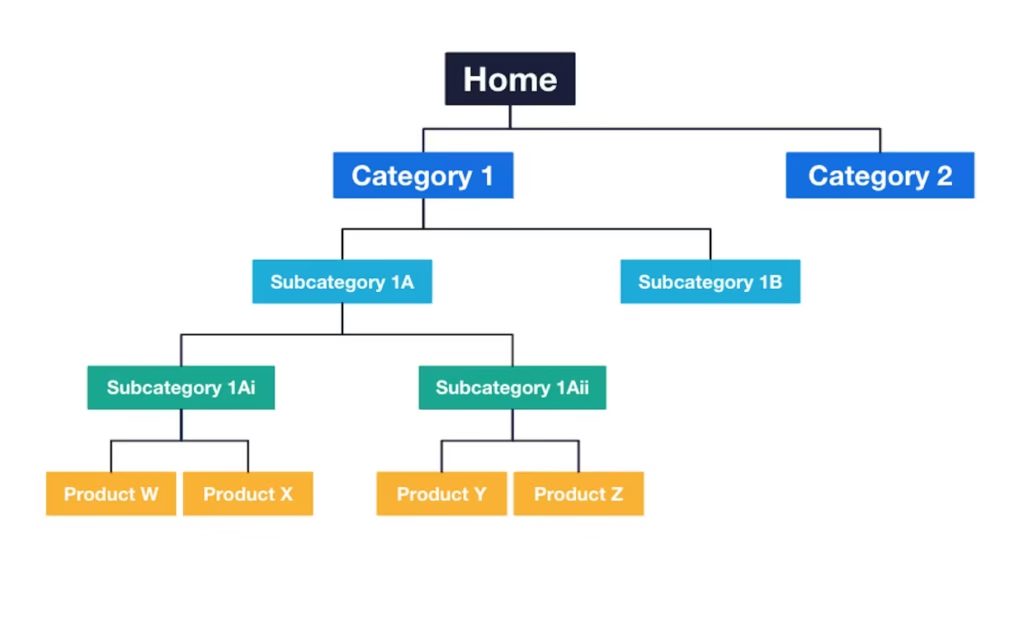
Proper headings
Clean structure
Easy navigation
These things help Google trust your website.
When a website loads fast and works well on mobile, Google prefers it.
What Is SEO and How Long It Takes
One common question after learning what is SEO is:
“How fast does SEO work?”
SEO is not magic.
SEO is slow but strong.
It usually takes:
A few weeks to see small improvements
A few months for real results
Long-term effort for stable growth
SEO rewards patience and consistency.
What Is SEO in One Simple Line
If a child asks what is SEO, the answer is simple:
SEO helps your website show up on Google.
That one sentence explains everything.
SEO is not about tricks.
SEO is about helping people find you.

Final Thoughts on What Is SEO
Now you understand what is SEO in a clear and simple way.
SEO helps websites:
Get noticed
Build trust
Grow naturally
Reach the right audience
If done honestly, SEO becomes the strongest digital marketing tool.
Learning what is SEO is the first step toward online success.